
Medically Reviewed By: Dr. Juliana Nahas, MD, FAAP, FMACP
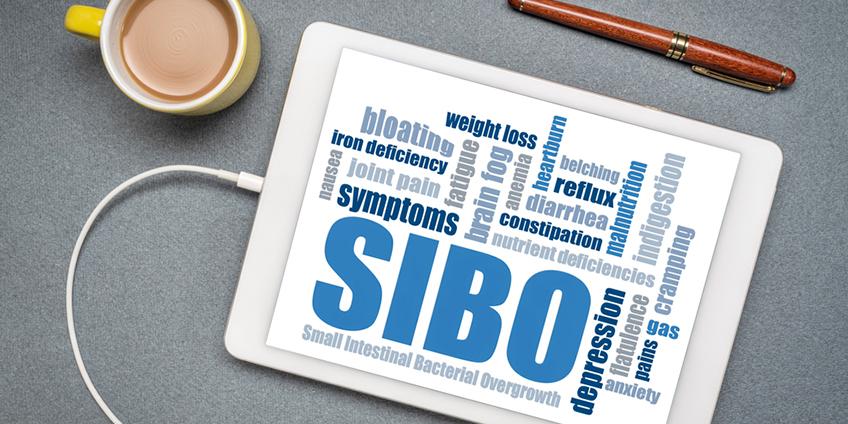
Possibly — and no, you’re not imagining things.
At Cedars Functional Medicine LLC, we often meet families who have been dealing with ongoing bloating, gas, abdominal pain, constipation, diarrhea, or IBS-like symptoms for months (or years). Many have already been told, “Everything looks normal.”
When symptoms keep showing up anyway, we start asking a different question: what’s driving the gut to struggle in the first place? That’s where SIBO (small intestinal bacterial overgrowth) and gut dysbiosis sometimes enter the conversation.
If your child:
You are not alone — and this is not just “a sensitive stomach.”
Chronic gut symptoms are one of the most common reasons families seek integrative pediatric care, especially when standard testing hasn’t provided answers.
SIBO occurs when bacteria that normally belong in the large intestine migrate into the small intestine, where they are not meant to live in large numbers.
When food reaches those bacteria too early, fermentation occurs — leading to:
Research led by Dr. Mark Pimentel, MD, a gastroenterologist at Cedars-Sinai, has shown that impaired small-intestinal motility is a major driver of SIBO. When the gut’s natural “clean-up wave” (the migrating motor complex) isn’t working well, bacteria are more likely to accumulate where they shouldn’t.
Dysbiosis refers to an imbalance in the gut microbiome — too many unhelpful microbes, not enough beneficial ones, or the wrong mix overall.
Studies in both children and adults associate dysbiosis with:
In short: the gut ecosystem matters.
SIBO and dysbiosis rarely have a single cause. They usually develop from a combination of factors, including:
Dr. Pimentel’s research helps explain why many children with IBS-type symptoms also struggle with bacterial overgrowth — motility and nervous-system regulation play a central role.
The small intestine is tightly regulated by the nervous system.
Peer-reviewed research shows that stress and nervous-system dysregulation can:
This does not mean symptoms are psychological. It means the gut and brain are in constant communication — and sometimes that communication gets a little too intense.
(If you’ve ever had a nervous stomach before a big event, you’ve experienced this firsthand.)
Probiotics can be helpful at the right time.
But when bacteria are already overgrowing in the wrong place, adding more bacteria can sometimes increase bloating and gas, not improve it.
As Dr. Allison Siebecker, ND, MS, LAc — a leading SIBO clinician and educator — explains, effective SIBO care requires:
In other words: timing matters.
Depending on your child’s symptoms, we may evaluate:
In select cases, targeted testing may help guide care instead of relying on trial and error. This approach aligns with American Academy of Pediatrics guidance when GI symptoms are persistent or affecting quality of life.
When dietary changes are recommended, they are:
This may include:
These strategies are consistent with clinical frameworks taught by the Institute for Functional Medicine (IFM) and with Dr. Siebecker’s emphasis on addressing root causes before liberalizing diet.
In integrative care, supplements are used with intention, not enthusiasm alone.
Depending on the child, this may include:
The goal is not long-term dependence — it’s restoring balance.
We also address:
Gut symptoms often improve when the nervous system feels safer and more regulated — a theme that runs through both motility research and clinical SIBO experience.
Conventional care often asks: “Is this something we need to worry about medically?”
Integrative care also asks: “What’s driving these symptoms, and how do we support healing?”
We absolutely use conventional treatments when indicated. We simply don’t stop at symptom suppression.
Ongoing bloating, gas, and gut discomfort are not random — and they’re not “just how your child is.”
SIBO or dysbiosis may be part of the picture, but more importantly, there is usually a path forward.
Our goal is to:
Call or schedule your free breakthrough consultation if you would like my help with your child's chronic gut symptoms.
Dr. Juliana Nahas, MD, FAAP, FMACP
When Dr. Nahas was a young doctor, she had two separate parents with a child with ADHD come in to the clinic in one day, and one parent asked for medication straight away, while the other refused medication and was seeking natural solutions instead.
ADD/ADHD
Conduct & Oppositional Disorders
Anxiety, Worry & Panic in Kids
Autism Spectrum Support
PANDAS / PANS
Immune-Triggered Neuropsychiatric Symptoms
OCD, Intrusive Thoughts & Compulsions
Mood Dysregulation
Depression
Sleep Issues & Fatigue in Children
Gut-Brain Symptoms
Food Sensitivities & Nutrient Deficiencies
Dr. Nahas’s private practice is 100% virtual and serves patients across the entire state of Florida. While the practice is registered in St. Petersburg, care is delivered remotely, allowing access to individuals and families throughout Florida without geographic restriction.